Scotland's Landscape Charter
Angus Forestry & Woodland Strategy 2024 – 2034
Landscape Statement – Vision
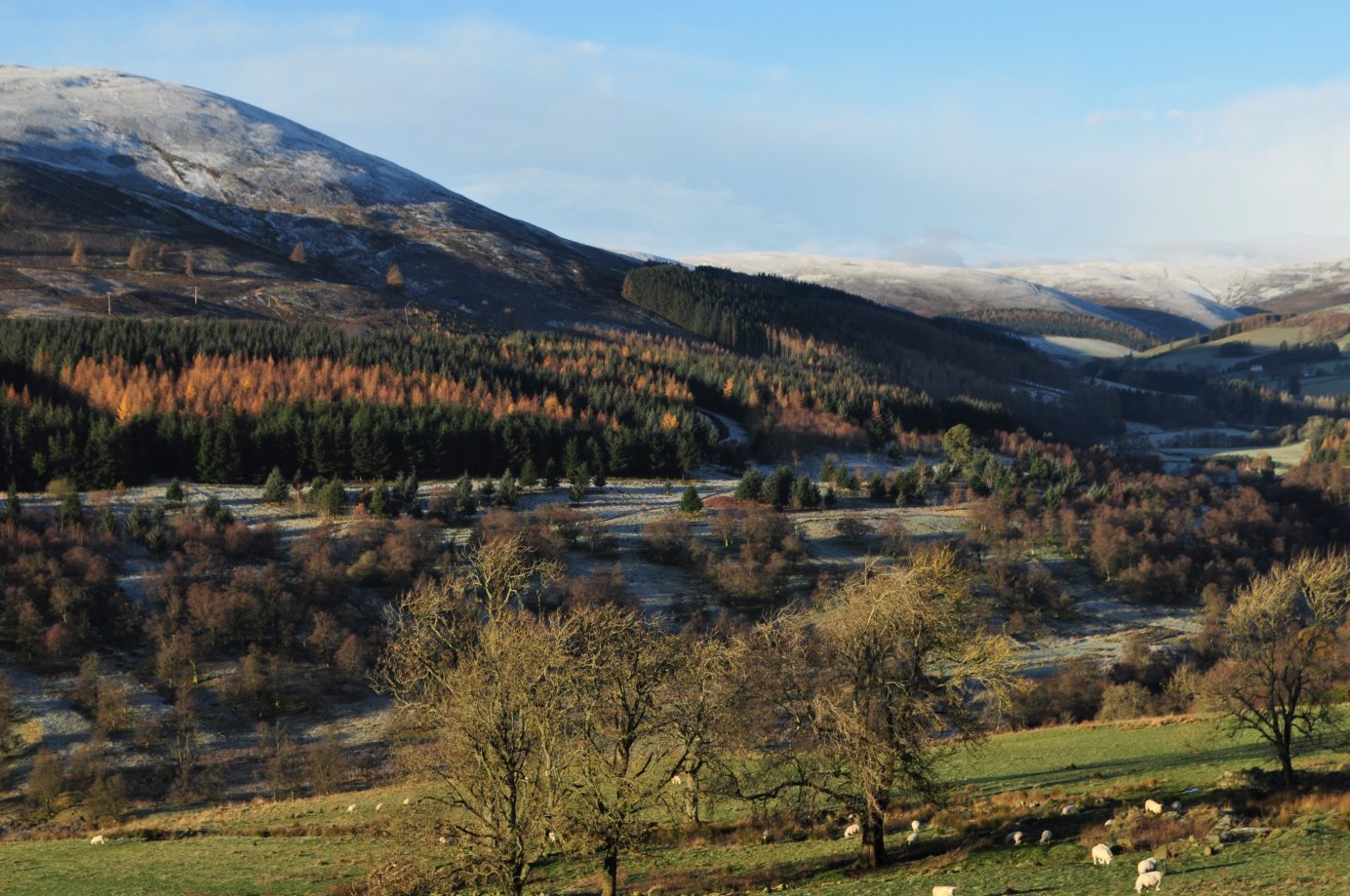
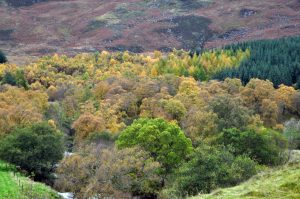
Our vision is that forests and woodlands of Angus will flourish and expand, provide high quality timber and form woodland nature networks with increased biodiversity. Angus landscapes will be resilient to climate change with forests and woodland storing carbon and playing a key role in natural flood management through slowing the flow of rainfall through the landscape. They will create attractive opportunities for recreation close to where people live and work and will provide opportunities for land-based businesses to adapt to a sustainable future.
Brechin was badly affected by flooding during Storm Babet in 2023. This event was a result of heavy rainfall in the Angus Glens part of the River South Esk catchment. It highlighted that this was at least part a wider landscape issue. It was recognised that changes in how we use the land can contribute towards creating a more climate change resilient landscape.
How does this project deliver the principles of the charter?
1. Collaboration
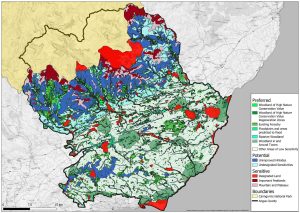
The strategy is specifically designed to compliment other landscape capacity studies prepared for wind energy, solar energy and settlement expansion. It builds upon baseline assessment carried out as part of the identification of Local Landscape Areas in Angus. They will all be part of the evidence base for the forthcoming local development plan for Angus. Together, they contribute towards place-based and landscape-led land use planning.
2. Dynamism
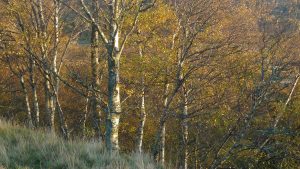
The strategy recognises that the landscape needs to change to meet the twin climate and biodiversity crises. As a landscape-based process, it seeks to achieve this while retaining special landscape qualities. The spatial strategy seeks to protect stored carbon in peatland whilst increasing carbon sequestration in forestry and woodland. The strategy seeks to embrace natural flood management to reduce the impacts of flood events through slowing the movement of water through catchments. It seeks to regenerate, expand, connect and diversify woodland of high nature conservation value to increase their biodiversity value, resilience to climate change and contribution towards natural flood management.
3. Diversity
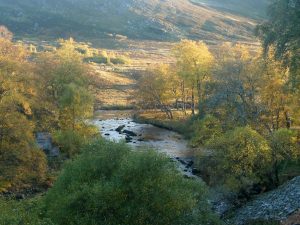
The strategy promotes diversity in forestry and woodlands whilst seeking balance with other land uses. It recognises that with climate change, Scots pine will become the main species in productive forestry within Angus, breaking down the sometimes-false distinction between productive forestry and biodiversity interests.
As well as promoting an increase in forestry and woodland cover, the strategy seeks to promote diversity in the uplands and encourages the re-emergence of natural tree lines, where montane woodland transition into montane scrub to increase biodiversity as well as contributing towards natural flood management. Opportunities for such montane woodland when associated with existing forests would also deliver landscape enhancement by removing the sharp transition between afforested and open habitats by the establishment of natural tree line. These woodlands naturally form part of a mosaic of habitats at the treeline.
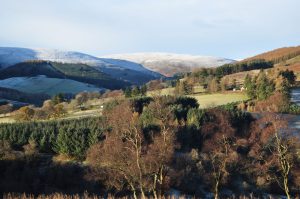
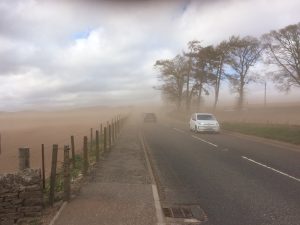
In the lowlands, Angus has some of the best agricultural land in Scotland. With better soils, intensification has led to open arable landscapes. Wind-blown soil erosion can often be an issue in lowland Angus, not only eroding valuable soils but also creating dust storms which affect air quality in settlements. With the climate predicted to become warmer and stormier, forests and woodlands can create shelter and reduce wind-blown soil erosion. As well as shelterbelts, there is opportunity for new forestry and woodland on flood plains or along river corridors to increase biodiversity, enhance woodland habitat networks and the resilience of landscapes to absorb natural flood events where seasonal floods make arable farming less appropriate.
What's Next
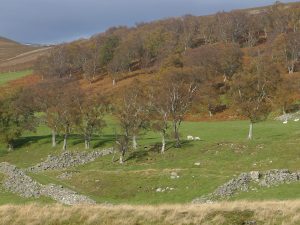
The strategy supports the Forestry Grant Scheme administered by Scottish Forestry. Proposals which comply with the strategy attract a grant uplift. In addition, a project officer is currently promoting riparian improvements within the mid catchment of the River South Esk through the catchment partnership.
The strategy is being used in the consideration of planning applications, particularly in relation to considering woodland of high nature conservation value and their expansion zones in the context of energy infrastructure applications such as solar voltaic development. Lastly, it will inform the forthcoming local development plan.
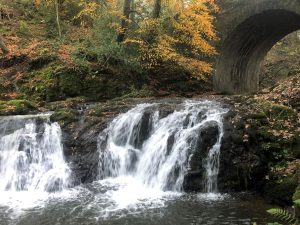
Image Credits:
Angus Council
Location
Angus
Year Completed
2024
Lead Contact
Stewart Roberts RobertsS@angus.gov.uk
Groups and Organisations Involved
Prepared by Angus Council with a steering group which included Scottish Forestry and NatureScot representatives. Consultation included organisations who represent forestry, agriculture, land ownership, nature conservation, country sports and public access. Consultation also included the general public.