
Scotland's Landscape Charter
Destination Tweed
Landscape Statement – Vision
Destination Tweed aims to celebrate and share the nature, history and stories of the River Tweed and deliver significant economic, environmental, educational and social benefits to the South of Scotland and North Northumberland.
Introduction to Destination Tweed: https://youtu.be/KNvy1s2Gtvs?si=naZWH2ixtatOe2c7
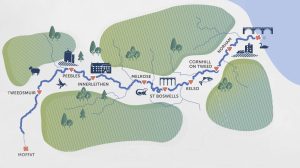
At the heart of Destination Tweed is the creation of the River Tweed Trail, a spectacular new walking and cycling route starting at Moffat before climbing to the source of the river, threading through the Scottish Borders and on to Berwick-upon-Tweed where the river meets the sea. This ambitious, multi-year, partnership-led investment includes a further 12 projects covering a wide range of cultural, river and landscape enhancements that are connecting communities and attractions along the route and creating opportunities to celebrate, care for, enjoy and promote the river sustainably.
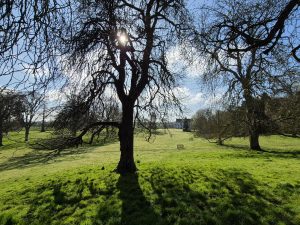
Makerston 2 – tree boxes in which new trees have been planted to replace lost mature trees within the designed landscape at Makerstoun, near Kelso
The project includes natural heritage conservation projects to tackle environmental issues at source through woodland and pollinator habitat creation, river restoration and control of invasive non-native species. An array of ambitious education, heritage and cultural projects provide a varied and exciting programme of events and opportunities for participation.
Destination Tweed is a practical demonstration of the Charter’s vision in action, showing how integrated landscape management can deliver benefits across environment, economy, community and culture.
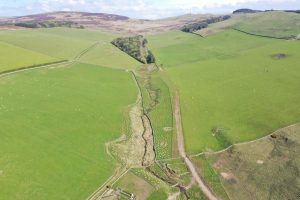 Edston looking north – riparian planting at Edston in Upper Tweed, delivered by Tweed Forum
How does this project deliver the principles of the charter?
1. Collaboration
Destination Tweed embodies the collaborative approach through its partnership model. The project was conceived, developed, and is now being delivered by a partnership of organisations, including environmental charities and place-based organisations, bringing together expertise, connections and resources to deliver meaningful change across the region.
By working together closely, our teams frequently identify and act upon opportunities for collaboration between Destination Tweed’s 12 projects, strengthening connections between organisations and communities, and delivering better value for funders and stakeholders.
Our place-based and landscape-led approach relies heavily on dialogue and cooperation between our delivery partners as well as local authorities, communities of place and interest, local businesses, and a wide range of other stakeholders who live, work and visit the south of Scotland and north Northumberland.
Bringing communities along with us is at the heart of Destination Tweed, and the contribution of volunteers plays a key part in many strands of the project. For example, co-curated community archaeology project Uncovering the Tweed draws heavily on local interest and passion, working with existing heritage groups to support them in taking forward their own strands of research as part of the wider project. In starting a conversation, we ensure that the project creates meaningful opportunities to get involved in exploring the sites and themes that matter most to those who have spent years championing the heritage and archaeology of their local area.
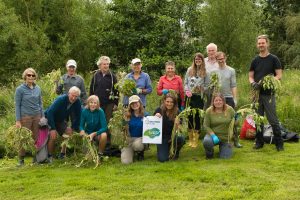 Peebles INNS volunteers – after a day of Himalayan balsam removal
2. Dynamism
The Charter acknowledges that landscapes will evolve and change, and that this change needs to happen at pace, particularly around climate and nature. Destination Tweed’s river restoration work, woodland and pollinator habitat creation, and control of invasive species are all active examples of delivering dynamic change at scale through land management.
To use our environmental projects as an example, through Destination Tweed, we aim to: plant 300,000 trees to create new native riparian woodlands in the upper Tweed; restore and enhance up to 40 hectares of wildflower-rich habitat across 50 sites; restore 20 historic designed landscapes with around 5,000 native and specimen trees; and create 80ha of upland native woodland through the addition of 52,500 trees and shrubs.
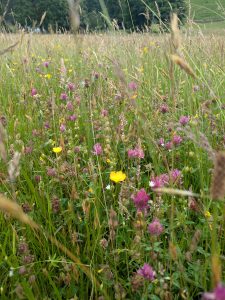 Corehead Farm Hay Meadow June 2025 – meadows enhanced by Buglife Scotland
By acknowledging that “the whole is greater than the sum of its parts”, Destination Tweed is creating dynamic change at scale, and at pace, across the Tweed’s landscapes.
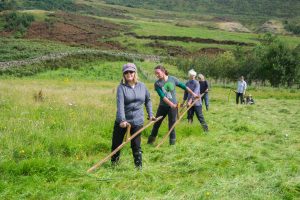 Scything, Corehead (C Patience). Participants developing skills during a scything workshop at Borders Forest Trust’s Corehead site.
3. Diversity
Tweed Forum is lead partner in the delivery of Destination Tweed, and has long understood the importance of diversity in strengthening resilience at a landscape scale.
This is actioned through a variety of Destination Tweed’s projects. We are working to create, restore, monitor and manage a network of wildflower-rich habitat for pollinators along the Tweed river corridor. We are creating native woodlands which support a broad range of flora and fauna (oak trees support more life than any other native tree!). Our riparian planting projects stabilise riverbanks, improve water quality and help reduce flood risk. Our agroforestry schemes integrate trees into farmland in a planned and productive way. And the removal of invasive non-native plant species allows the riverbanks to return to a vibrant, flourishing and diverse ecosystem.
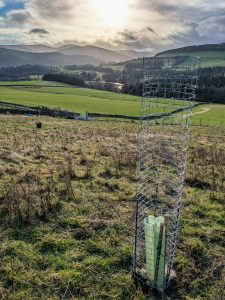 Neidpath agroforestry – agroforestry tree in cactus guard, allowing continued grazing while the tree establishes
Our work creating 80ha of upland planting contributes to Borders Forest Trust’s vision for Southern Scotland as a place where a rich tapestry of native woodlands and wild places flourish, cared for by volunteers and local communities.
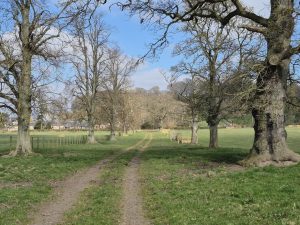 Muirhouselaw 1 – tree boxes in which new trees have been planted to restore an historic avenue of trees at Muirhouselaw, near St Boswells
Some strands of Destination Tweed involve significant capital works, such as construction of the River Tweed Trail and the construction of a new bunk house at the Crook Inn. However, the project’s whole life carbon emissions will be net zero within 15 years, and will be net positive in the long term, resulting in less atmospheric carbon overall, as the trees that we are planting now continue to sequester carbon decades into the future.
What's Next
Delivery of Destination Tweed continues into 2028, though its impacts will be felt for many decades afterwards. Central to project success is the creation of the River Tweed Trail which, once completed, will create opportunity for more people to spend more time along the river and in its landscapes. Project partners will build on the strong connections forged during delivery of Destination Tweed, collaborating to ensure a healthier river catchment and a lasting legacy for future generations.
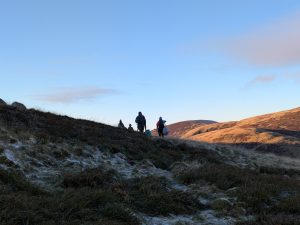
Image Credits:
Destination Tweed and various -see individual image credits
Location
Destination Tweed focusses on the River Tweed and its landscapes and communities, from the river’s source north of Moffat to the sea at Berwick-upon-Tweed.
Year Completed
In progress
Lead Contact
Luke Fisher, Destination Tweed Project Director - info@destinationtweed.org
Groups and Organisations Involved
Tweed Forum, Borders Forest Trust, Southern Upland Partnership, Buglife Scotland, Tweedsmuir Community Company, South of Scotland Destination Alliance, Scottish Borders Council, Dumfries and Galloway Council, Northumberland County Council